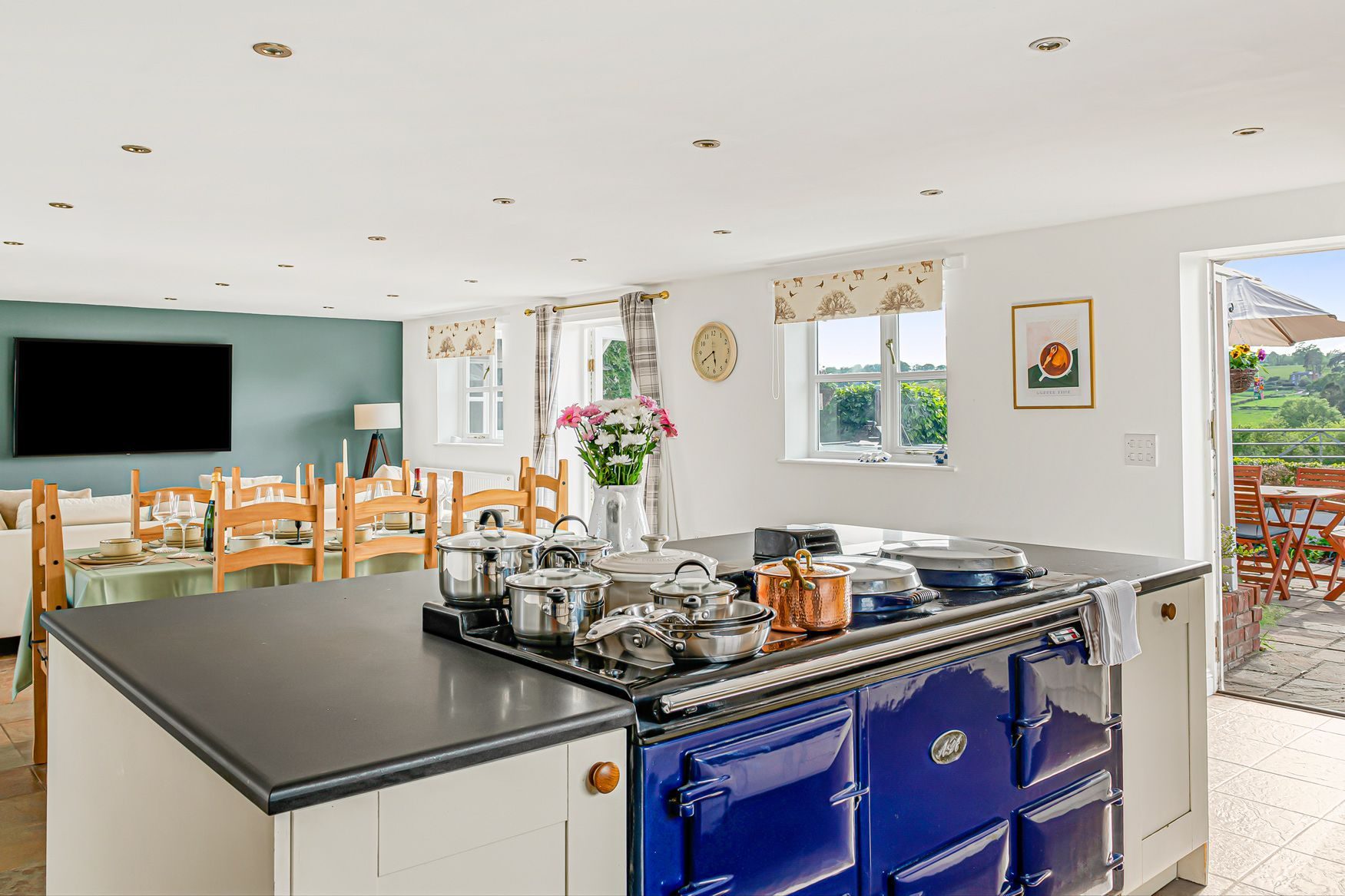
The AGA in the kitchen is a modern electric conversion of the original blue AGA cast-iron range. It looks like an AGA, cooks like an AGA, and stays cool in July when the original would heat the house to a sweat. It does take half a day to get used to. This is what we wish we’d known.
What is different about an electric AGA
The original AGA is one continuous source of stored heat. The four ovens (or two, depending on size) run at fixed temperatures, always on, never off. The cast-iron mass radiates into the kitchen all winter, which is wonderful in November and lethal in July.
The electric version at Lower Wood Farmhouse keeps the same architecture (four ovens, two hotplates, the iconic enamel finish) but lets each oven be turned on and off independently, and lets each be set to a temperature. The hotplates are inductive: instant heat, no waiting.
The result: an AGA you can cook on year-round, with the rhythm of an AGA but the control of a normal range cooker. The trade-off: it does not warm the kitchen the way the original does, which guests staying through winter sometimes miss. The inglenook fire next door earns its keep then.
The four ovens, what each does
Numbered top to bottom on the right-hand stack.
Roasting oven (top right, hottest). Around 240°C when on. The one for searing-roast joints, fast-roasting potatoes, the first stage of bread. Three weeks in, this is the oven we use most.
Baking oven (second from top, moderate). Around 180°C. The one for cake, sourdough proper bake, slow-roast chicken. Reliable, well-behaved.
Simmering oven (third from top, low). Around 110°C. The one that does eight-hour braises and overnight stocks. Set the lamb shoulder going at lunchtime, eat at seven.
Warming oven (bottom, very low). Around 70°C. Plates, soft-rising bread dough, keeping the first batch warm while the second cooks.
The trick is to set the right ovens on first thing in the morning when planning a day of cooking, and let them come up while you have breakfast. Twenty minutes from cold to ready.
The hotplates
Two on top, both inductive. The big one on the left is for stock pots, big pans, the boiling phase of anything. The smaller one on the right is for sauce work, milk for porridge, the kettle.
Important: the lid lifts on a chain. Lift it gently. The cast-iron lid above is the heat-retainer for the hotplate.
Starting your stay: a checklist
The first night is when AGA bewilderment happens. To save you a phone call:
- Open the AGA control panel (behind the cabinet on the left of the AGA). Switch on the ovens you intend to use today. Switch off the rest. The roasting and baking ovens take twenty minutes to come up. The simmering and warming ovens take an hour.
- The hotplates have their own switches on the panel. Turn on as needed.
- The kettle lives on the small hotplate. Boils in three minutes.
- The fridge to the right of the AGA is an American-style fridge-freezer. The utility kitchen has the second fridge and the dishwasher.
On a quiet evening, you can turn the ovens off again. They cool quickly (under an hour). On a stay with daily cooking, leave them on.
What we recommend cooking on it
For a four-night family stay, this is the rotation we suggest.
Friday: arrival BBQ + welcome bake. The brick BBQ outside takes the headline. Inside, a tray of focaccia in the baking oven (twenty minutes) is the right “we have arrived” smell. Recipe in the kitchen folder.
Saturday: pizza oven night. AGA off, pizza oven on outside. The dough has been proofing in the warming oven since breakfast, which is the whole point of an AGA.
Sunday: a long roast. The headline meal of any AGA week. A leg of lamb from D W Wall & Son in the roasting oven for an hour, then transferred to the simmering oven for two hours more. The kitchen smells of rosemary all afternoon. Crisp potatoes go in the roasting oven for the last forty minutes.
Monday breakfast. Bacon in the roasting oven on the grilling tray (no smoke in the kitchen). Eggs from the coop. The whole stay is justified by this single breakfast.
Three things to know
The kettle. Stays on the small hotplate continuously. You will reach for the spout, not the on-switch. There is no on-switch.
The toast. The AGA-purist way is the wire toast bat under the roasting-oven door. The way most guests prefer is the Dualit toaster in the utility kitchen.
The cleaning. Do not try to clean the cast-iron tops. They are seasoned. A damp cloth on a cool oven is all that is wanted. Janet, who looks after the house, handles the proper clean.
What it cannot do
In the interest of honesty:
- Stir-fry. The hotplates are inductive but the layout is wrong for a sizzling wok. The induction hob in the utility kitchen handles this.
- Steam. No steam function. Stovetop steamer fine.
- A fast cup of coffee. Use the Sage espresso machine in the utility kitchen.
Why we put one in at all
Self-catering houses for twelve people are often, in the kitchen, slightly disappointing: a long sterile worktop, a four-ring induction hob, a single oven that cannot fit two trays at once. The AGA is the answer to “how do we make this feel like a real house to cook in for a week.” Modern electric, so it works in July. Period detail, so it looks like it has always been there. Worth the slight learning curve.
Lower Wood Farmhouse is a five-bedroom farmhouse on a 4,500-acre working cattle estate in south Shropshire. The kitchen is built around a modern electric AGA conversion and a separate utility kitchen with a Sage espresso machine, Dualit toaster, and full-size American fridge-freezer. Book direct.